
Why Composite Decking Works So Well on the Sunshine Coast
We’re not going to sugarcoat it – the Sunshine Coast climate is tough on outdoor structures. Between the salt air if you’re anywhere near the coast, the humidity that sits around for months, and UV levels that’ll fade just about anything, traditional timber decks cop an absolute beating here. We see it all the time with renovation jobs where we’re ripping out timber that’s only been down for seven or eight years but looks like it’s been there for twenty.
That’s where composite decking really shines for our climate. The material is engineered specifically to handle weather extremes, which is exactly what we get here. No rotting when we get those weeks of constant rain during wet season. No warping when the summer heat cranks up to the high 30s. And because it’s got UV protection built right into the material, your deck isn’t going to fade to that washed-out grey colour that timber decks get after a few years in our sun.
Here’s what really matters though – termites and pests can’t touch composite materials. That alone saves Sunshine Coast homeowners thousands in potential repairs down the track. We’ve pulled up timber decks that were absolutely riddled with termite damage, sometimes in homes where the owners had no idea there was even an issue until they started seeing soft spots. With composite, that’s just not a problem you’ll ever deal with. The material is completely pest-immune, which gives you proper peace of mind.

The Low Maintenance Reality (And What That Actually Means)
So when we say low maintenance, here’s what we’re actually talking about. With a timber deck, you’re looking at proper maintenance every single year. Sanding, re-staining or re-oiling, replacing damaged boards, checking for rot and pest damage. That’s easily a full weekend of hard work, plus you’re spending $300-600 on products every time. Do that for ten years and you’ve spent thousands of dollars and hundreds of hours just keeping your deck functional.
With composite decking installation? You’re done. Seriously. The only thing you need to do is give it a wash with soap and water maybe twice a year if you want to keep it looking pristine. That’s it. No staining, no sealing, no worrying about whether you’ve done enough to protect it through the next wet season. We’ve got customers with composite decks that are 12-15 years old and still look fantastic with nothing more than an occasional clean.
And that cleaning? Dead simple. Just a bucket of soapy water and a brush. No special products, no specific techniques, no stress about doing it wrong. Some of our customers just hit it with the hose and call it a day. For families with kids running around, or for people who’d rather spend their weekends at the beach than working on home maintenance, that difference is massive. You’re getting back probably 10-15 hours a year that would’ve gone into deck maintenance, plus saving the money you would’ve spent on products and tools.
Material Options and What We Actually Recommend
There’s a few different composite brands available, and honestly, they’re not all created equal. We work primarily with Trex, TimberTech, and Modwood because they’ve proven themselves in our climate over years of installations. Some of the cheaper composite options out there don’t hold up as well to the Sunshine Coast conditions, and we’d rather recommend something we know is going to last than deal with callbacks down the track.
Hollow vs Solid Composite Boards
This is where people get confused. Hollow boards are lighter and generally a bit cheaper, solid boards are heavier and more dense. For most Sunshine Coast applications, we recommend solid composite boards. They feel more substantial underfoot, they handle our temperature swings better without expanding and contracting as much, and they’re just more durable overall for high-traffic areas. If you’re doing a deck that’s going to get hammered by kids, pets, and regular entertaining, solid boards are worth the extra investment.
Colours and Textures That Work Here
The colour range has come a long way. You’re not stuck with that fake-looking brown anymore. We’re installing a lot of greys and charcoals lately, they look modern and they hide dirt better than lighter colours. The wood-grain textures have gotten really good too – you’ve got to look close to tell it’s not real timber. And here’s a practical thing – go for slip-resistant surfaces if your deck is anywhere near a pool or if you get morning dew. Makes a huge difference for safety.

Professional Installation - Why It Matters More Than You'd Think
Here’s where a lot of DIY jobs go wrong, and where some cheaper installers cut corners. Composite decking looks straightforward to install, but the material behaves completely different to timber. Get the spacing wrong, don’t account for expansion and contraction properly, or mess up the ventilation underneath, and you’re going to have problems within a couple years.
We see it happen. Deck boards that’ve buckled because someone didn’t leave proper expansion gaps. Boards that’ve sagged because the joist spacing was done for timber instead of composite. Or worst one we’ve seen – mould growing underneath because there wasn’t adequate airflow. These aren’t small fixes, they’re full replacements.
When we do a composite decking installation, we’re following the manufacturer specifications exactly. That means proper joist spacing for composite’s weight and flex characteristics. Correct expansion gaps that account for our temperature range here on the Coast. Ventilation underneath that prevents moisture buildup in our humid climate. And we’re using stainless steel or coated fasteners because regular screws will rust out in our salt air within a few years.
The subframe work is where quality really shows. We’re building a structure that’s engineered for the specific composite material being used, not just reusing an old timber deck frame. Because composite boards have different load requirements and span capabilities, the whole support structure needs to be done right from the start. That’s the difference between a deck that lasts 25+ years and one that starts having issues at the five-year mark.
Design Flexibility and How It Fits Your Outdoor Living Plans
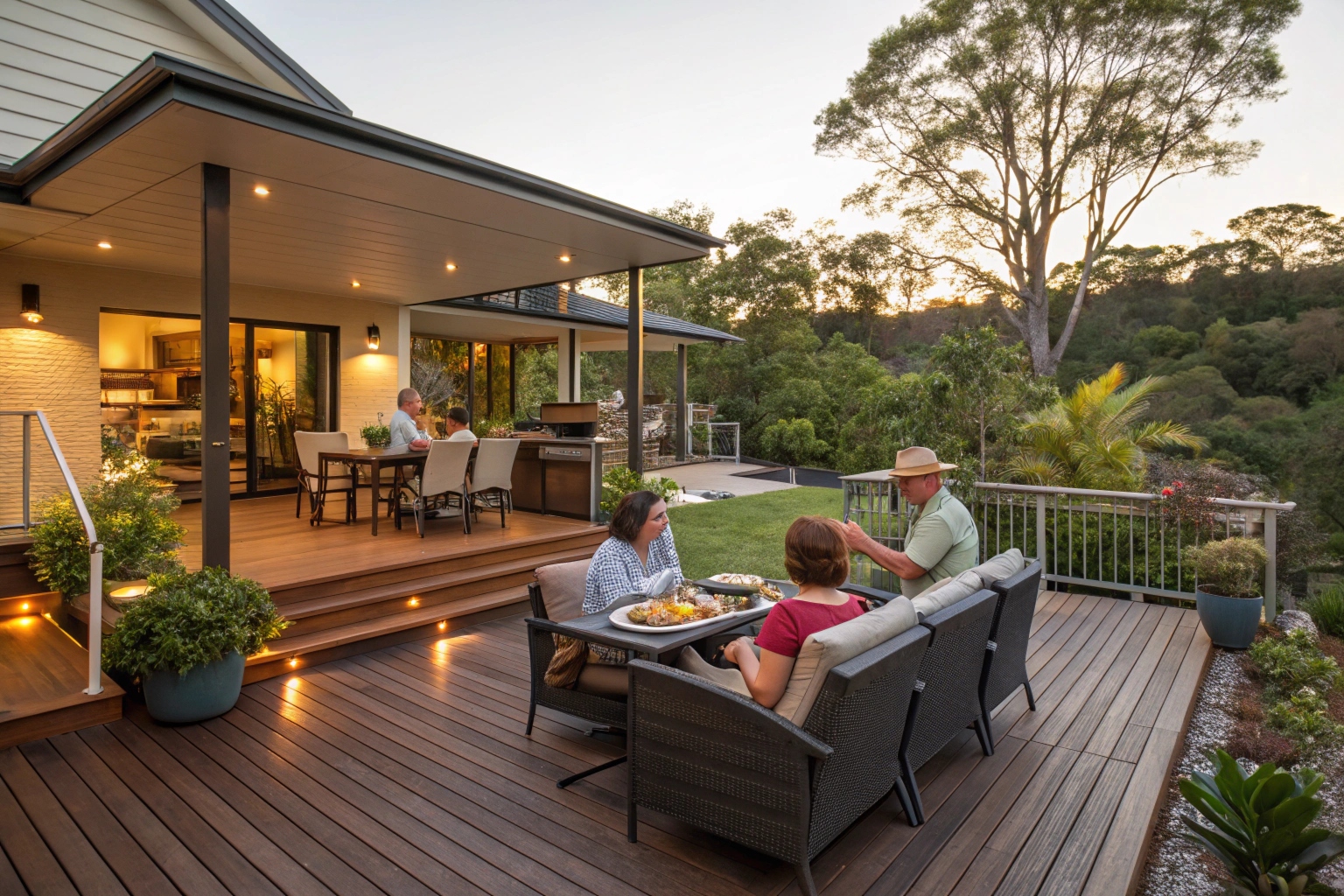
One of the best things about working with composite materials is how versatile they are for different design ideas. We’re doing a lot of multi-level decks lately, wraparound entertaining areas, even curved sections that flow around pool edges. The material cuts and shapes easier than timber in a lot of ways, which opens up options that would’ve been way more complicated or expensive with traditional decking.
The integration with other outdoor features is where things get really interesting. We’re regularly connecting composite decks to outdoor kitchens, fire pit areas, pergolas, and pool surrounds. Because you’re not dealing with different maintenance requirements for different timber types, everything can work together without creating extra work for you down the track. And if you want to add built-in seating or planter boxes, composite handles that beautifully without the rot issues you’d get with timber in those always-damp spots.
Lighting is another area that’s become huge. LED strip lighting under the deck boards, step lights for safety, even lights built into handrails. With composite, you can run those wires through hollow boards or hide them in ways that just aren’t practical with timber. Creates that resort-style ambience people move to the Sunshine Coast for.
And here’s something we’re seeing more of – people matching their composite deck colour to their home’s exterior scheme. You can get really cohesive looks now, everything from modern greys that complement Colorbond roofs to warmer browns that work with brick or render. Makes your whole outdoor space feel like it was planned together instead of added on later.
Frequently Asked Questions About Composite Decking
Yeah, composite can get warm in direct sun, not going to lie about that. But so does timber, and so does concrete for that matter. The newer composite materials have come a long way with heat reflection technology, and lighter colours stay cooler than darker ones. Most of our customers say it’s manageable, especially if you’ve got some shade over part of the deck or if you’re using it in the morning and evening when it’s not peak sun. Throw down some outdoor rugs in high-traffic areas if you’re worried about it.
Composite costs more upfront, usually about 1.5 to 2 times what you’d pay for good quality timber. But here’s the thing – you’re saving $300-600 every year on maintenance, plus all those hours of work. Over a 15-20 year period, composite actually works out cheaper because you’re not constantly pouring money into upkeep. And when you sell, buyers love seeing a deck that doesn’t need work. We’ve had real estate agents tell us it’s a genuine selling point.
Not with the products we install. The technology has gotten really good. Wood grain patterns, colour variations, even the feel underfoot – it’s come a long way from that plasticky look composite had 10-15 years ago. Most visitors to our customers’ homes don’t realize it’s composite until they’re told. And after a couple years when timber would be fading and weathering, composite still looks like it did on day one.
Most manufacturers warranty their boards for 25-30 years, and we’re seeing decks from the early installs still going strong. The material doesn’t rot, doesn’t get eaten by termites, doesn’t split or warp. Biggest thing is making sure it’s installed properly with the right subframe and fasteners. Do it right from the start, and you’re looking at decades of use without replacement.
Ready to Stop Maintaining and Start Enjoying Your Deck?
If you’re spending your weekends working on your deck instead of using it, something’s not right. That’s not what outdoor living on the Sunshine Coast is supposed to be about. We’ve helped hundreds of homeowners across Noosa, Maroochydore, Caloundra, Buderim, and Nambour make the switch to composite decking, and the feedback is always the same – they wish they’d done it sooner.
We offer free quotes for composite decking installation throughout the Sunshine Coast. Come out, have a look at your space, talk through what you’re trying to achieve with your outdoor area, and give you an honest assessment of what’s going to work best for your situation and budget. No pressure, no sales tactics, just straight advice from people who’ve been doing this for years.
Whether you’re building a new deck from scratch, replacing an old timber deck that’s seen better days, or adding onto an existing outdoor area, we can walk you through the whole process. Materials, design options, timeline, costs – we’ll cover everything so you know exactly what you’re getting before any work starts.
Give us a call or shoot us a message to arrange your free quote. Let’s get you set up with a deck you can actually enjoy instead of constantly maintain. Your weekends will thank you for it.
